with Chris Clearfield
Why do bookkeepers who started a business for freedom end up buried in client work? Author and coach Chris Clearfield says to stop treating each issue as a one-off problem and start seeing the tensions underneath. He explains the low altitude cycle, shares client stories about urgency and avoided conversations, and offers a free 10-minute tension map exercise that shows you why you're stuck and what small experiment to try next.
Ask about this episode
Get instant answers with citations — powered by Ask the Show.
Show notes
See what the team at The Successful Bookkeeper has on right now →
Most bookkeepers start their own practice wanting freedom and flexibility, then find themselves locked in by client demands, hiring that backfires, and work that never lets up. Chris Clearfield, author of The High Altitude Entrepreneur, offers a different way to look at it: those aren't problems to solve one at a time, they're tensions to manage. Michael and Chris talk through why good, capable owners get stuck, what's usually hiding under the surface, and a simple 10-minute exercise you can try this week.
Chapters
- [01:00] Chris's path from Wall Street to coaching
- [04:00] Why owners get locked into the work
- [09:00] The low altitude cycle explained
- [12:00] Problems to solve vs. tensions to manage
- [15:00] The tension map and the repair shop
- [20:00] Conditioned tendencies and working with a coach
- [26:00] The broker who avoided one conversation
- [32:30] Inside The High Altitude Entrepreneur
- [37:30] Where to start and a closing thought
Why freedom turns into a trap
Michael lays out the pattern many bookkeepers will recognize: you're a technician, you're good at the work, so you keep doing the work while the rest of the business goes untouched. Wrong-fit clients, pricing that doesn't leave a real margin, and hiring before processes are documented all pile on. "I'm really busy, so let me hire somebody to make me less busy," as Michael put it, and then you're managing someone else inside the chaos. Chris's response was simple: "These are good people who do a good job, who want to run a really good business, and they end up getting stuck."
The low altitude cycle and tensions to manage
Chris describes what he calls the low altitude cycle, where owners solve whatever is right in front of them, under stress, with no room to think creatively. The paradox: "You get better at solving problems. And what does that get you? Well, it gets you more problems to solve." His alternative is to see the opposing forces beneath the surface. Two he and Michael name for bookkeepers are serving the client versus running the business for yourself, and doing the work versus building the business. "The path to entrepreneurial freedom is all about seeing these tensions and managing them more effectively."
The tension map in action
Chris shares the story of an industrial repair shop owner with seven priorities on her whiteboard and less than an hour spent on them all week. Mapping the upsides and downsides of urgency against strategic focus showed her that urgency fed her ego and gave her a quick reward, while strategic work felt uncertain. Once she could see that, she could choose differently. Chris offers the same exercise to listeners as a free download that takes about 10 minutes: pick one tension in your business and map what you gain, what it costs, and what you're afraid of on the other side.
Conditioned tendencies and the hard conversation
Chris and Michael move below the surface, using the iceberg image. Chris explains that many of our default behaviors, like pleasing a client or jumping on the urgent thing, are conditioned tendencies that once kept us safe or earned us belonging. He shares a second client story: a successful commercial real estate broker who wanted to grow but felt held back by a back-office employee of ten years. The broker had never had the performance conversation because he valued harmony. Seeing the tension between performance and harmony led to small experiments, and now, in the client's words, each hard conversation is a hill to climb with a whole landscape on the other side. Chris's broader point is that we often don't state what we want, then feel disappointed when we don't get it.
Small experiments and the book
Chris wrote the book after noticing that "just delegate" wasn't working for entrepreneurs who still held on to a lot. That led him to the tension between control and delegation, and to the idea that owners need to take responsibility for their own contribution to the problem. The book's method is to see the tensions, widen your perspective, then run small experiments, such as shifting one thing one time to see whether the fear is as bad as you think. Done over and over, that slowly expands your range. He is clear that you can do this alone with the book, but a skilled coach can help you see blind spots and feel what's keeping you stuck faster. Michael adds that doing some of the work first, like the tension map, makes any coaching more productive.
Links mentioned
- The Tension Map (free 10-minute download): thetensionmap.com
- The High Altitude Entrepreneur by Chris Clearfield
- Meltdown by Chris Clearfield
- The Successful Bookkeeper: thesuccessfulbookkeeper.com
About the guest
Chris Clearfield is co-founder of Clearfield Leadership, an author, speaker, and decision-making expert. He studied physics and biochemistry, started his career on Wall Street during the financial crisis, and wrote Meltdown, a book about complex systems and how they fail. He now coaches entrepreneurs on how they make decisions and how to build businesses that support the lives they want, and is the author of The High Altitude Entrepreneur.
About the host
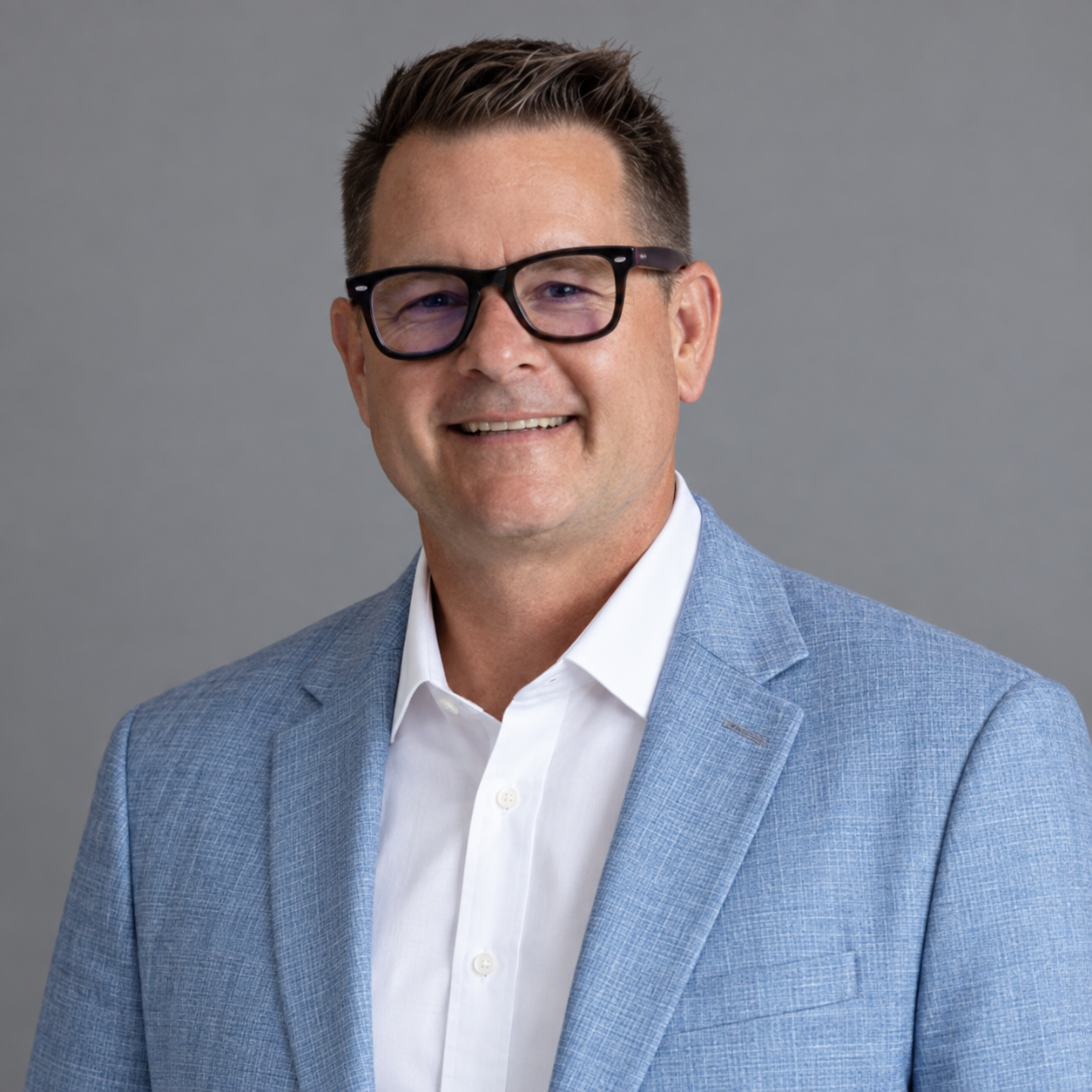
Michael Palmer
Michael Palmer is the host of The Successful Bookkeeper podcast — almost 600 episodes and counting — and founder of The Successful Bookkeeper Global. He's spent over 15 years in the bookkeeping industry, working one-on-one with thousands of bookkeepers across the globe. He started this work because of his father — a brilliant electrical contractor who worked twice as hard as he should have had to, because nobody on the financial side was in his corner. That gap is what The Successful Bookkeeper exists to close. His view: bookkeepers are the most undervalued force in small business — and every bookkeeper who builds a real business changes two families: theirs, and their clients'.
Full transcript
[00:00] Chris Clearfield: Hey, how, how much are you leaning into stuff that's, that's not in your lane, that's not exactly what you know, because it helps you build the business? And, and one of the challenges of that, as you named it, is it can be uncomfortable and it can create uncertainty. You don't know how to do something, you, you don't wanna do that. But the path to entrepreneurial freedom is all about seeing these tensions and, and managing them more effectively.
[00:24] Ad Read: You're listening to The Successful Bookkeeper with your host, Michael Palmer. Listen each week as inspiring guests share their secrets of success to help you increase your confidence, work smarter, and build a business you love.
[00:46] Michael Palmer: Welcome back to The Successful Bookkeeper Podcast. I'm your host, Michael Palmer. And today's show is going to be a fun one. Our guest is an author, speaker, and decision-making expert who helps business owners understand what drives their choices and how to build businesses that better serve their lives. Chris Clearfield, welcome to the podcast.
[01:08] Chris Clearfield: Hey, thank you, Michael. I'm excited to be here.
[01:11] Michael Palmer: It's great to have you. And, you know, I like to start off each episode with the little bit of the journey. How did you end up doing what you're doing today? So we get to know, Yes.
[01:24] Chris Clearfield: Well, it's totally clear in retrospect and not at all clear as the, as, as the journey unfolds, which is often the way it is. I, I have a science background, so I studied physics and biochemistry as an undergrad. So very quantitative, numbers-oriented. And my first job was on Wall Street, which was not my expected path. I thought I'd go to grad school and, and do a PhD and kind of pursue the sciences. But, you know, I was lucky. You know, what that foundation really gave me is it gave me, I think, 2 things. It gave me the ability to spot patterns and to think in systems. And I worked on Wall Street during the financial crisis. So I went away from that having a, you know, really a front row seat to this unfolding. And I got really interested from that and how organizations make decisions and how individuals inside those organizations— made decisions. And so that, that, you know, fast forward a little bit, that brought me to write my first book, which is called Meltdown, which is all about complex systems and how people make decisions within them and how they fail. And then that,
Read the full transcript
Members get full transcripts of every episode, plus unlimited Ask the Show questions across 500+ conversations with world-class bookkeepers.
Become a member