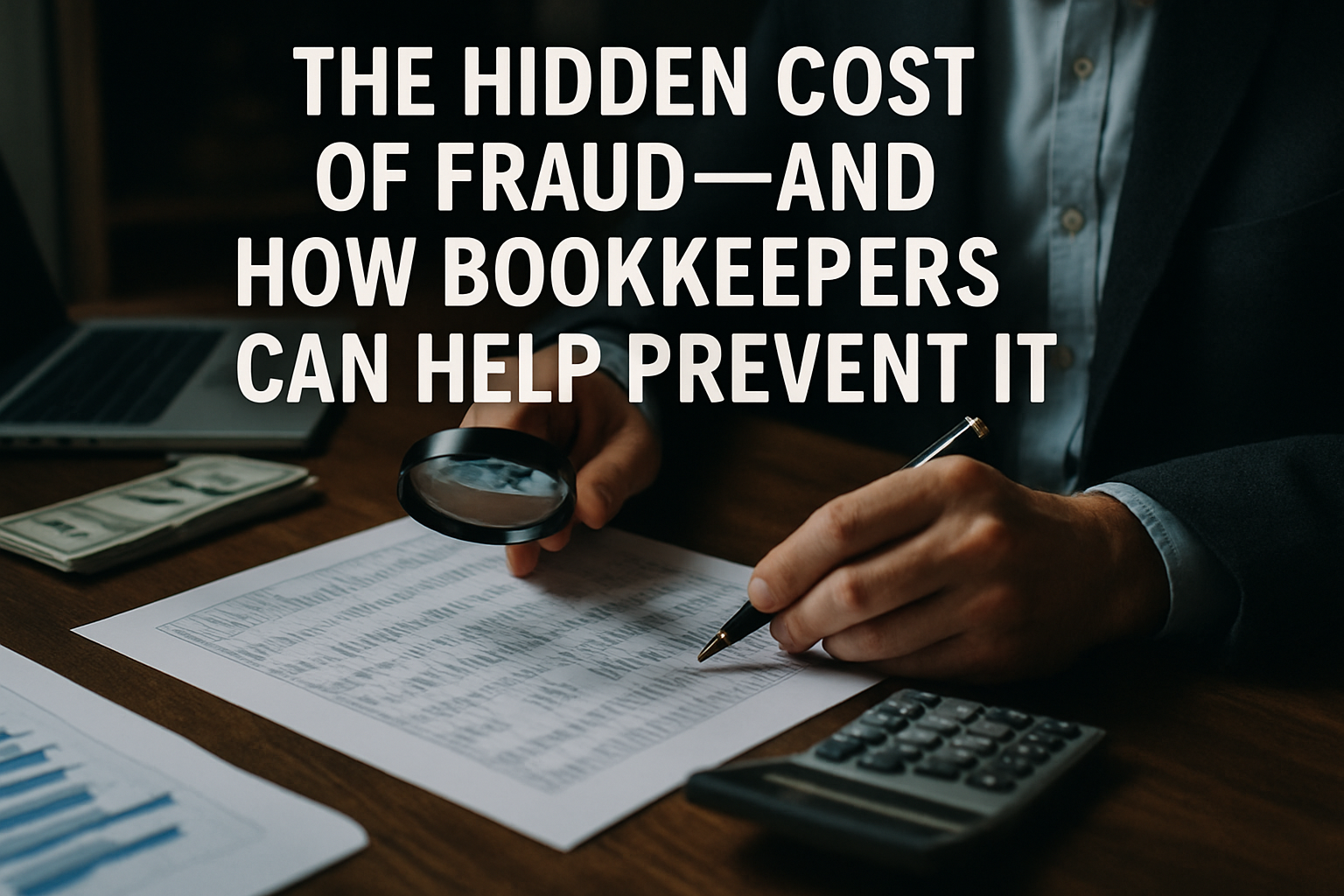
In an episode of the The Successful Bookkeeper Podcast, fraud expert Hubert Johnson delivers a clear message: small businesses are often the most vulnerable to fraud—and the least prepared to stop it. Bookkeepers, as the financial gatekeepers, are in a powerful position to protect their clients.
But doing so requires more than just balancing the books.
Here are the key lessons from the episode and how you can apply them in your own practice.
1. Fraud Doesn’t Always Look Like Fraud
Most fraud isn’t flashy. It’s subtle, slow, and often committed by someone the business owner trusts—an employee, partner, or even a family member. In many cases, it goes unnoticed for months or even years.
Common red flags include:
- Duplicate payments or missing receipts
- Unusual vendor activity
- Round-dollar transactions or excessive manual entries
- Employee resistance to oversight or audits
What to do:
Regularly review transaction patterns, bank reconciliations, and vendor lists. Trust your instincts—if something looks off, dig deeper.
2. Segregation of Duties Matters—Even in Small Teams
A key fraud-prevention strategy is segregation of duties—ensuring that no one person has full control over financial processes like approving payments, issuing checks, and reconciling accounts.
In small businesses, this is tough—but not impossible.
What to do:
- Suggest that business owners review and approve payments above a certain threshold
- Use cloud accounting tools with activity logs and permissions
- Separate data entry from review and approval whenever possible
Even basic separation adds a layer of accountability.
3. Technology Can Help—But It’s Not Foolproof
Automation and cloud-based tools like Xero, QuickBooks Online, or Dext help reduce manual errors and improve transparency—but they don’t eliminate the risk of fraud. In fact, overreliance on software can create blind spots.
What to do:
- Ensure regular, manual review of reports and reconciliations
- Use audit trail features and enable multi-user access with limited permissions
- Recommend two-factor authentication and secure password policies for all financial platforms
4. Educate Clients About Risk—Without Fearmongering
Fraud prevention isn’t about scaring your clients—it’s about helping them make smarter decisions. Many small business owners assume fraud “won’t happen to them” because they trust their team or feel their business is too small to be targeted.
What to do:
- Include basic fraud education in onboarding or review meetings
- Share real-world examples of fraud in small businesses (without naming names)
- Offer a simple internal controls checklist as added value
5. Proactive Bookkeepers Create Safer Businesses
When you go beyond the numbers and help clients build stronger systems, you protect not just their finances—but their reputation, staff relationships, and long-term stability.
This positions you as a trusted advisor—not just a data processor.
Fraud is more common—and more costly—than many business owners realize. But it’s not inevitable. With the right systems, oversight, and education, bookkeepers can play a vital role in preventing financial damage before it starts.
Prevention is always cheaper than recovery.
Want to protect your clients and strengthen your advisory role? Listen to the full episode on The Successful Bookkeeper Podcast for more insights on how to identify, prevent, and respond to fraud in small businesses.

-1.png)